Precautionary limit placed on sardine catches, despite no further mortality reports


The Department of Forestry, Fisheries and the Environment (DFFE) has received no further reports of dead or dying sardines since September 3, and no strandings have been reported along the KwaZulu-Natal coast.
However, monitoring is continuing and the event cannot yet be regarded as concluded, the DFFE states.
The DFFE continues to investigate the widespread sardine mortality reported along the South African coast since late July and similar strandings reported in Namibia.
The DFFE’s Small Pelagic Scientific Working Group (SWG-PEL) met on September 4 to consider all available scientific information, including diagnostic results, mortality observations and estimates, observer information and fishing data.
Preliminary mortality estimates are scenario-based and highly uncertain. They depend on assumptions about fish density in visible patches, the width and continuity of affected coastal areas and the extent to which local observations can be extrapolated. There is also no reliable estimate of the number of fish that may have sunk to the seabed, the DFFE states.
Although the magnitude of the mortality remains uncertain, the available evidence did not indicate that it had caused a sufficiently large reduction in the sardine population to warrant a complete closure of the fishery, the DFFE notes.
Nevertheless, the SWG-PEL recommended a temporary precautionary limitation on catches while further information is obtained. The DFFE has decided to implement the recommendations by the SWG-PEL.
Sardines moving northwards during the annual sardine run typically occur in pockets of cooler nearshore water.
The relatively warm inshore conditions along the KwaZulu-Natal coast since September 3 may, therefore, have limited the further northward movement of affected shoals, although this remains a plausible oceanographic interpretation rather than a confirmed barrier to the mortality event.
Laboratory testing has confirmed pilchard herpesvirus (PHV) in affected sardines from both the Western Cape and the Gqeberha area, in the Eastern Cape, supporting a link between the Eastern Cape mortality and the earlier PHV-associated event in the Western Cape.
Taken together, the consistent detection of high levels of PHV in affected sardines, its confirmation in samples taken in the Western and Eastern Cape and the observed mortality pattern indicate that PHV is the most likely primary cause.
Investigations have not supported harmful algae or the marine biotoxins screened for as the primary cause, although oceanographic and other environmental conditions cannot yet be excluded as contributing stressors.
Laboratory, pathological and epidemiological work is continuing, the department says.
The mortality event began in the Western Cape in late July. A small sample of sardines that had been collected off the KwaZulu-Natal coast in June and July, before any mortalities were reported, tested negative for PHV.
However, because the sample was small and limited in space and time, this does not establish that PHV was absent from the wider sardine population at that time, but it provides a useful pre-event comparison.
Testing of other comparison samples is continuing. There is currently no evidence identifying when or how the virus reached South African waters and no basis for attributing its origin to a particular country, company or product.
The October-November hydroacoustic survey will provide the first post-event estimate of sardine biomass and distribution, the department says.
The DFFE continues to work with provincial and local authorities, Namibia, South African Institute for Aquatic Biodiversity, Rhodes University, the fishing industry and other relevant institutions on reporting, sampling and monitoring. Arrangements have been made to test Namibian sardine samples for PHV.
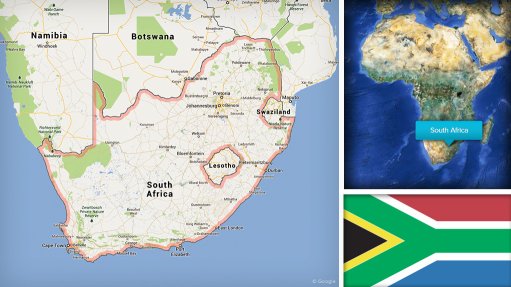
Following the start of the event in late July, reports subsequently extended along the southern Cape to Gqeberha by August 27, then to the East London area and the northern Wild Coast, including the coastline between Port St Johns and Mbotyi Beach, about 60 km south of the KwaZulu-Natal border by September 2.
Similar strandings were reported at Walvis Bay’s Langstrand, Swakopmund and Henties Bay, in Namibia.
The outermost reported locations span about 2 600 km of coastline, but mortality was not reported continuously over this distance and the Namibian reports cannot be conclusively linked to the South African event until laboratory comparisons have been completed.
Further, the SWG-PEL also considered comparisons with the Australian PHV-associated mortality events.
These provide an important warning and useful scientific context, but Australian mortality estimates and percentage population reductions cannot be applied directly to South Africa because the survey methods, spatial coverage, coastline, oceanographic conditions, fish distribution and stock context differ.
PHV is not known to infect people. Members of the public must, however, not collect, eat, feed to animals or use as bait any dead or dying sardines found on beaches or near the shore, because such fish may be decomposed or contaminated and their movement could spread potentially infected material.
As confirmed in the joint DFFE and National Regulator for Compulsory Specifications public statement, the mortality event does not provide a basis for discontinuing commercially produced canned sardines processed under regulatory oversight.
Article Enquiry
Email Article
Save Article
Feedback
To advertise email advertising@creamermedia.co.za or click here

Projects

Latest Multimedia


Latest News

Showroom

Supplier & Distributor of the Widest Range of Accurate & Easy-to-Use Alcohol Breathalysers
VISIT SHOWROOM
Established in 1933, EKATO is the world leader in agitation technology, supplying agitators for processes and applications such as chemicals and...
VISIT SHOWROOM



Press Office
Announcements
What's On
Subscribe to improve your user experience...
Option 1 (equivalent of R125 a month):
Receive a weekly copy of Creamer Media's Engineering News & Mining Weekly magazine
(print copy for those in South Africa and e-magazine for those outside of South Africa)
Receive daily email newsletters
Access to full search results
Access archive of magazine back copies
Access to Projects in Progress
Access to ONE Research Report of your choice in PDF format
Option 2 (equivalent of R375 a month):
All benefits from Option 1
PLUS
Access to Creamer Media's Research Channel Africa for ALL Research Reports, in PDF format, on various industrial and mining sectors
including Electricity; Water; Energy Transition; Hydrogen; Roads, Rail and Ports; Coal; Gold; Platinum; Battery Metals; etc.
Already a subscriber?
Forgotten your password?
Receive weekly copy of Creamer Media's Engineering News & Mining Weekly magazine (print copy for those in South Africa and e-magazine for those outside of South Africa)
➕
Recieve daily email newsletters
➕
Access to full search results
➕
Access archive of magazine back copies
➕
Access to Projects in Progress
➕
Access to ONE Research Report of your choice in PDF format
RESEARCH CHANNEL AFRICA
R4500 (equivalent of R375 a month)
SUBSCRIBEAll benefits from Option 1
➕
Access to Creamer Media's Research Channel Africa for ALL Research Reports on various industrial and mining sectors, in PDF format, including on:
Electricity
➕
Water
➕
Energy Transition
➕
Hydrogen
➕
Roads, Rail and Ports
➕
Coal
➕
Gold
➕
Platinum
➕
Battery Metals
➕
etc.
Receive all benefits from Option 1 or Option 2 delivered to numerous people at your company
➕
Multiple User names and Passwords for simultaneous log-ins
➕
Intranet integration access to all in your organisation